Two kinds of leadership in one incident room
I walked into my first big incident with a speech about ownership. It lasted about four seconds.
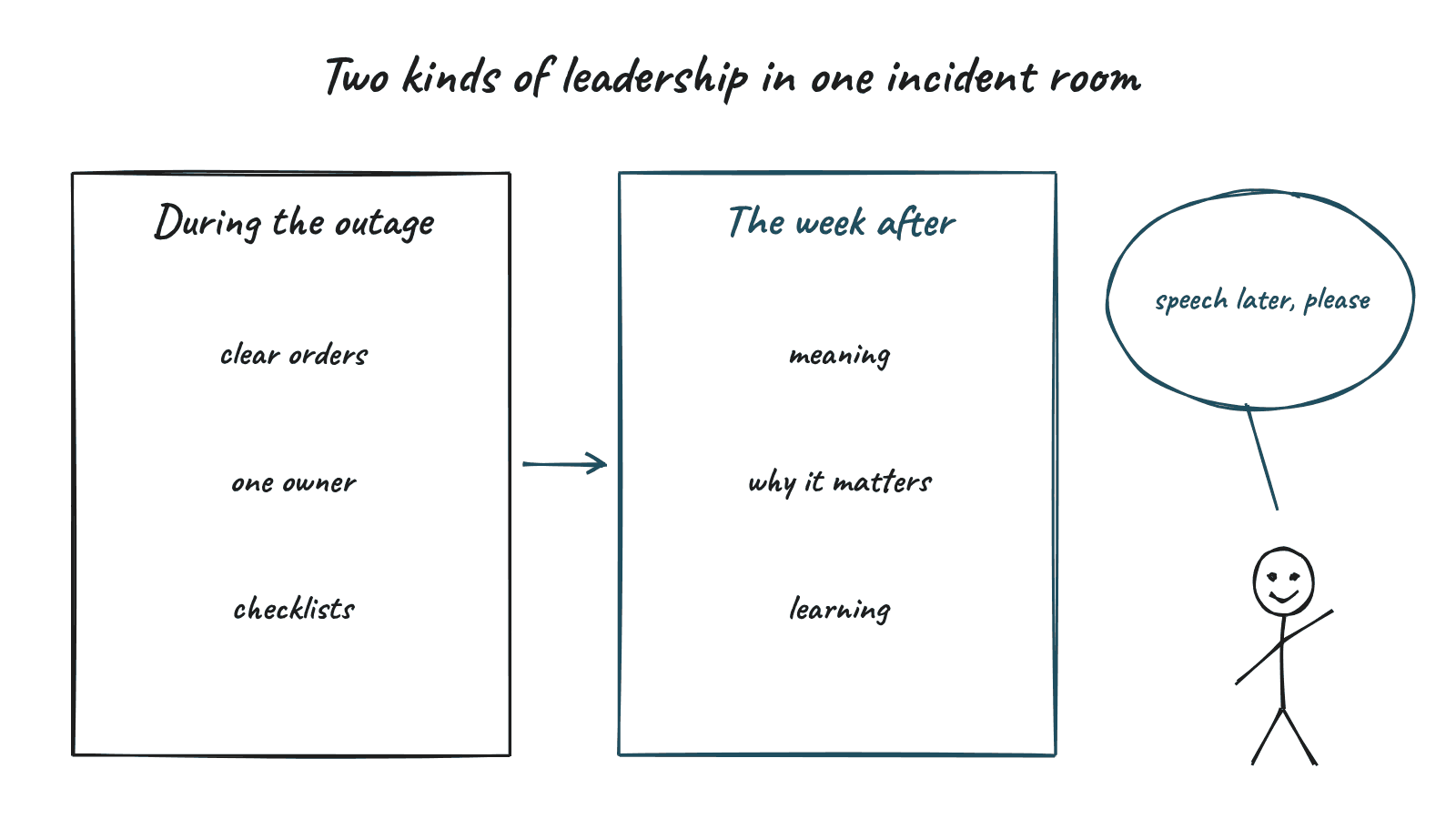
The first major production incident I ever led was at night. A core service was down and every minute meant failed transactions. I walked into the room with a speech in my head about calm, ownership and learning.
Nobody wanted a speech. They wanted someone to say, "You check the database. You restart the gateway. You call the vendor. Report back in ten minutes."
Two styles, two jobs
Leadership theory often describes two broad styles. Transactional leadership is about clear structure. Set goals, agree on rewards and consequences, check the work. Transformational leadership is about meaning. Paint a vision, inspire people, help them grow into something bigger. Nobody wants a TED talk while the payments are failing.
In my leadership foundation course these were presented side by side, and I remember thinking that the textbook made them sound like personality types. In practice they feel more like tools. You pick the one the moment needs.
The incident room needs transactions
In a crisis, ambiguity is the enemy. People are stressed, information is incomplete, and everyone wants to help at once. A transactional approach brings order. Clear roles. Short check ins. Explicit decisions.
People sometimes call this cold or bossy. I think it is kind. You remove the burden of guessing. People can focus on their slice of the problem.
At that first incident, once I stopped trying to inspire and started assigning, things moved. We found the issue in forty minutes. It was a certificate that had expired. Of course it was.
The week after needs transformation
But if you only ever lead transactionally, you build a team that waits for instructions. That works for a while, until you are on leave, or asleep, or simply wrong.
The week after the incident is where transformational leadership matters. Why did a certificate expire without anyone noticing? What kind of team do we want to be? One that firefights well, or one that has fewer fires?
That conversation needs a different voice. Less command, more curiosity. You ask questions, you share the bigger picture, and you let people own the fix. When the team designed their own certificate monitoring, they cared about it far more than if I had simply ordered it.
Switching is the skill
Each style is fine on its own. Knowing when to switch is the hard bit. I have seen leaders who stay in crisis mode for months because it feels productive. I have also seen leaders give inspiring talks while the building is metaphorically on fire.
A simple check I use now: is the problem urgent and well defined? Then be transactional. Is it important but open ended? Then be transformational.
In large transformation programmes
In large scale digital transformation and migration work, you need both every day. Cutover weekends are pure transactional discipline, with checklists and go or no go calls. The months before are about helping hundreds of people believe the change is worth it.
The odd part is that the speech I had prepared was a good one. It was just meant for the following week.